About Me
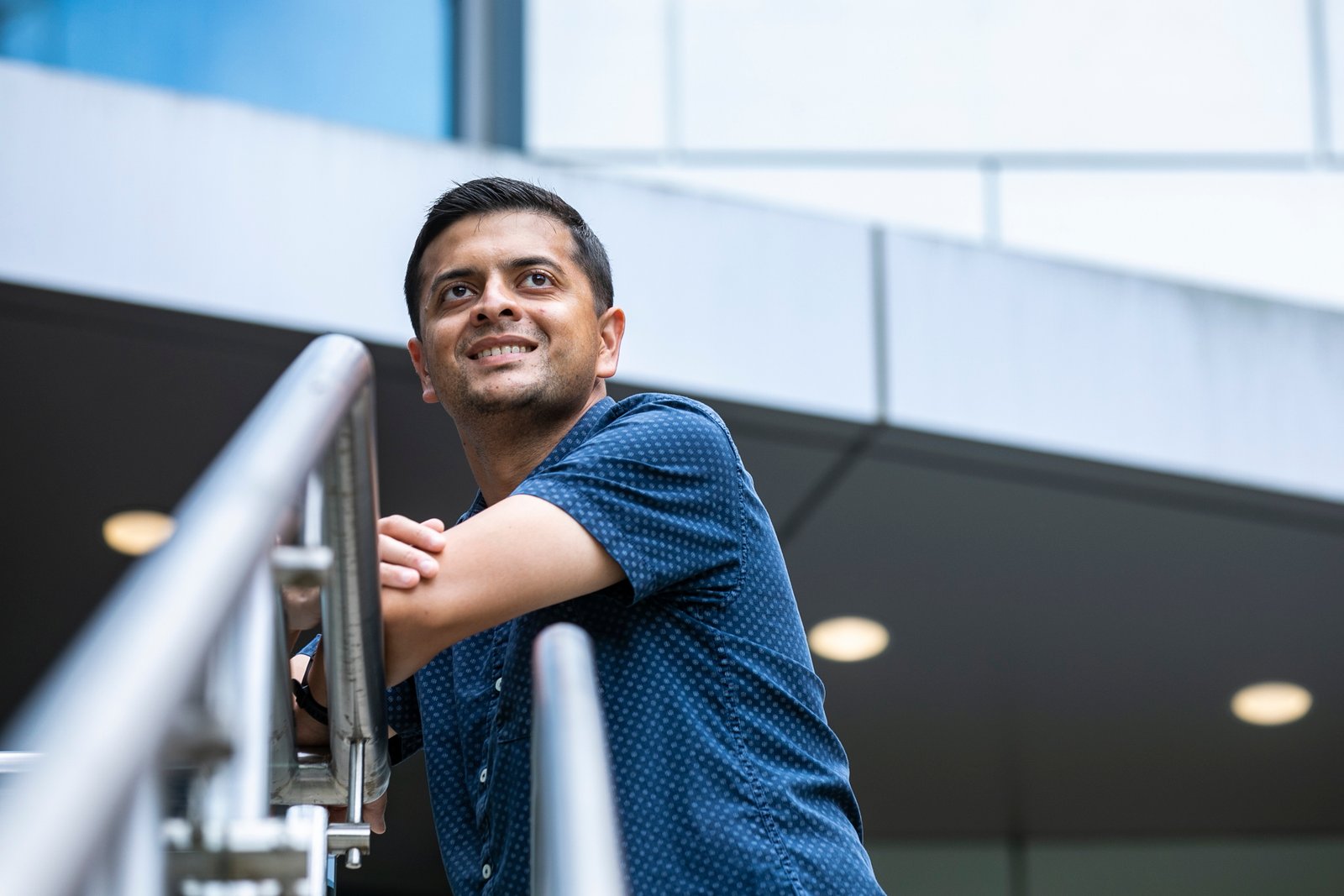 SP
SP
I am a bioengineer whose work sits at the intersection of motor control, physiological sensing, robotics, and rehabilitation. Across my training, I have focused on a common question: how can the body’s own signals be used to understand the neuromuscular system, support movement through assistive technologies, and ultimately improve rehabilitation? My research combines engineering and movement science to study how neural, muscular, mechanical, and sensory processes interact to produce movement, and how those interactions change with injury or disease.
Research Program
Decoding muscle dynamics reveals how interactions across the neuromotor pathway produce movement, where control breaks down, and how rehabilitation and assistive technologies can restore it.
Neuromotor Pathway
The research program treats movement as an integrated loop spanning neural command, muscle activation and deformation, joint motion, sensory feedback, and interaction with assistive technologies. By measuring and perturbing multiple points across this pathway, the goal is to determine how these components couple to produce movement, how those relationships break down in neuromotor disorders, and how rehabilitation can restore them.
Four research thrusts
Stage 1 is divided into four research thrusts. Thrusts 1–3 are active areas of current work; Thrust 4 captures the sensory-feedback foundation that informs the broader program.
- Thrust 1 · Neuromotor disorder biologyCurrent
- Thrust 2 · Multimodal interfaces for bionic controlCurrent
- Thrust 3 · Fundamental motor control at the muscle levelCurrent
- Thrust 4 · Sensory feedback integration
Quantify couplings across the pathway
Develop cortico-muscular, electro-mechanical, musculo-kinematic, musculo-sensory, and kinematic-sensory metrics that quantify cross-signal relationships across the full chain and localize impairment.
- Neuromuscular coupling, cross-correlation, structural models
- Perturbation and adaptation paradigms
- Generalization across CP, stroke, SCI, and amputation
Translate metrics into intervention
Use validated metrics to forecast response and support clinician-in-the-loop therapy decisions.
- Observational data collection during standard care
- Prediction of treatment response
- Metric-guided rehabilitation trial
Contact
Open to collaborations, questions, and conversations about movement science, neuromuscular sensing, and rehabilitation technology.